
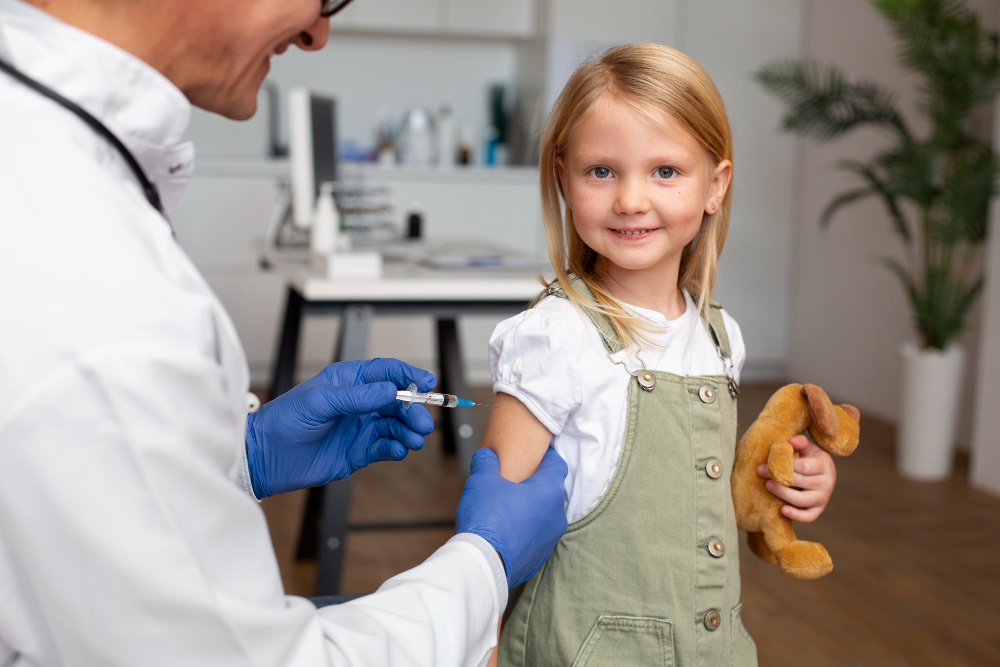
Regular vaccinations protect your child from many serious diseases. They are a safe and proven way to keep kids healthy. In fact, childhood immunization benefits every family and the whole community. Vaccines help your child build strong defenses against harmful germs. As a result, your child can grow up healthy and safe. This blog explains why regular vaccinations are important, how they work, and what parents need to know.
What Are Regular Vaccinations?
Vaccinations are shots or drops that help prevent certain diseases. Children get them at different ages, following a set vaccine schedule for kids. These vaccines protect against illnesses like measles, polio, and whooping cough. Usually, doctors or nurses give these vaccines during regular check-ups. Because children’s immune systems are still growing, regular vaccinations are very important.
How Vaccines Work to Protect Children
Vaccines teach the body to fight germs. When your child gets a vaccine, their body learns to recognize and attack the disease. This means, if your child meets the real germ later, their body can stop it quickly. For example, the polio vaccine helps the body fight off the polio virus. As a result, your child stays healthy and avoids serious illness.
Key Benefits of Regular Vaccinations
There are many reasons why vaccinate children is so important. Some key benefits include:
According to the CDC and WHO, vaccines save millions of lives every year. In addition, they help children stay in school and enjoy a healthy childhood.
Common Diseases Prevented by Vaccines
Vaccines protect against many serious diseases. Some of the most common include:
Because these diseases can cause serious problems, regular vaccinations are the best way to keep your child safe.
Recommended Vaccination Schedule for Children
Doctors follow a set vaccine schedule for kids. This schedule tells you when your child should get each vaccine. For example, babies get their first shots at birth, two months, and four months. As your child grows, they get more vaccines at regular check-ups. The CDC and WHO both provide easy-to-follow charts for parents. Always ask your doctor for the latest schedule, as it may change over time.
Addressing Common Myths and Concerns
Some parents worry about vaccine safety. However, vaccines are tested carefully before use. They are safe for most children. In rare cases, mild side effects like fever or soreness can happen. But these are usually short-lived. Studies show that vaccines do not cause autism or other long-term problems. If you have questions, talk to your doctor. They can explain why regular vaccinations protect your child and answer your concerns.
Tips for Parents on Keeping Up with Vaccinations
Staying on track with your child’s vaccines is important. Here are some helpful tips:
By following these steps, you help ensure your child gets full protection.
Prevention and Community Protection (Herd Immunity)
When most children in a community are vaccinated, it is harder for diseases to spread. This is called herd immunity. Because of herd immunity, even babies and people who cannot get vaccines are protected. As more families follow the vaccine schedule for kids, the whole community stays healthier. Therefore, regular vaccinations protect your child and everyone around them.
In summary, regular vaccinations protect your child from many serious diseases. They also help keep your family and community safe. Consult a pediatrician at Yashonandan Hospital for personalized vaccination guidance and to keep your child’s immunizations up to date. Our experts are here to ensure your child’s health and safety with the right vaccinations.